
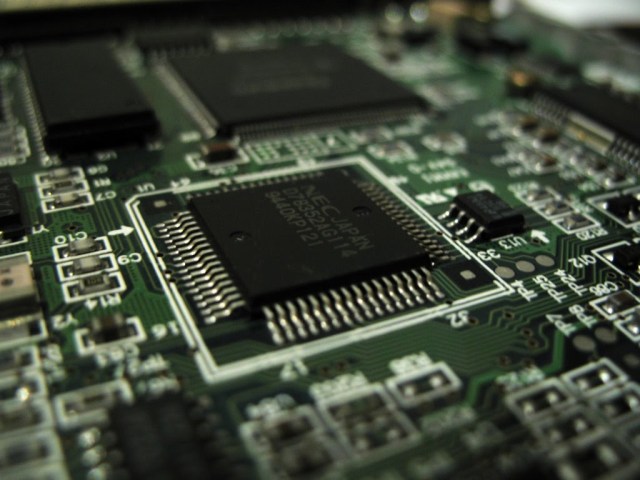
People often use the words “microprocessor” and “CPU” (Central Processing Unit) equally, but there is a difference. A computer system that fits on a single integrated circuit chip is called a microprocessor. On the other hand, the CPU is the most important part of a computer system and does most of the work.
Both microprocessors and CPUs are the brains of a computer system, but there are some key changes between the two that make them different. Here are some of the main ways that microprocessors and CPUs are different:
Page Contents
What is The Difference Between CPU and Microprocessor?
Integrated vs. Separate Component: A microprocessor is an integrated circuit that has the processor, memory, and functions for input and output all on one chip. The CPU, on the other hand, is a separate part that is usually attached to the base of a computer system and linked to other parts like memory and input/output devices.
Usage: Most embedded systems and small electronic gadgets, like calculators, cameras, and cell phones, use microprocessors. CPUs are used in desktop computers, servers, and other computer systems with more processing power.
Architecture: Compared to CPUs, microprocessors have a simpler architecture because they are only made to do a small number of jobs. CPUs, on the other hand, have a more complicated design with multiple processing cores and advanced features that let them handle a wide range of jobs and data types.
Power Use: Microprocessors are made to use very little power, which makes them perfect for gadgets that run on batteries. CPUs, on the other hand, need more power because they are made to do more complicated jobs.
Cost: Because they are made for specific tasks and don’t need as much working power, microprocessors are usually less expensive than CPUs. CPUs, on the other hand, are more expensive because they are more complex and have more working power.
Is The CPU Also a Microprocessor?
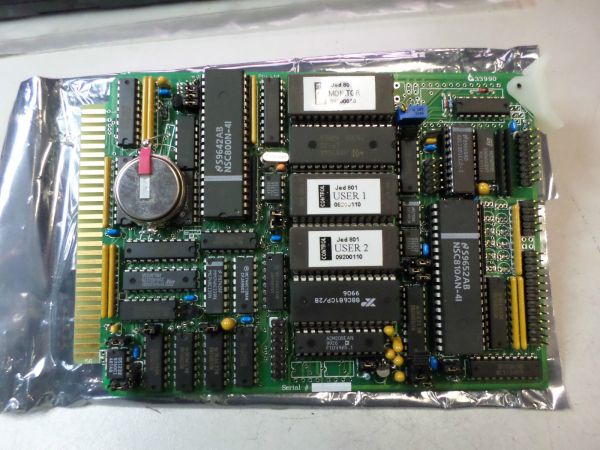
The Central Processing Unit, or CPU, is a type of computer. In fact, a computer’s CPU is the most important and complicated microchip. A microprocessor is a small piece of electronics that has a central processing unit, memory, and other parts that are needed to follow orders.
The CPU is the computer’s brain. It is in charge of carrying out orders, doing calculations, and managing the flow of data. It is the most important part of a computer system, and how well it works decides how fast and well the system works.
While all CPUs are microprocessors, not all microprocessors are CPUs. Microprocessors are in a lot of different things, like computers, cameras, and smartphones. But most of the time, the word CPU refers to the microprocessor in a computer system.
CPUs are the most powerful and advanced type of microprocessor because they are made to handle complicated codes and do calculations quickly. They are needed to run operating systems and software programs and do complicated jobs like editing videos, playing games, and running scientific simulations.
Why is The CPU Called a Microprocessor?
The Central Processing Unit (CPU) is the brain of a computer system, responsible for executing instructions and performing calculations. The term “microprocessor” is often used interchangeably with CPU, but it specifically refers to a type of CPU that is small enough to fit on a single integrated circuit (IC) or chip.
The first microprocessors were developed in the early 1970s, and they represented a significant breakthrough in computer technology. Prior to the development of the microprocessor, CPUs were typically made up of multiple discrete components, such as transistors and diodes, which were connected together on a printed circuit board. This made CPUs large, expensive, and power-hungry, which limited their use in everyday computing applications.
By contrast, the microprocessor was small enough to fit on a single chip, making it more affordable and easier to integrate into a wide range of devices. This allowed for the development of smaller, more powerful computers, as well as other electronic devices such as calculators, digital watches, and video game consoles.
The term “microprocessor” comes from the fact that these early chips were designed to perform the same functions as larger CPUs, but on a much smaller scale. They were able to process data and execute instructions in a fraction of the time that earlier CPUs could, while also consuming much less power.
Today, the term “microprocessor” is used to refer to a wide range of CPUs, from simple, low-power chips used in embedded systems to complex, high-performance processors used in supercomputers and servers. Regardless of their size or complexity, all microprocessors share the same basic function: to execute instructions and perform calculations using digital logic circuits.
What are the 5 functions of CPU?
Computer brains are CPUs. It executes software instructions and calculates. Control, arithmetic logic, and cache memory make up the CPU. Five CPU functions:
1. Fetch: The CPU gets program instructions from memory. The CPU’s instruction register receives instructions from memory.
2. Decode: After fetching the instructions, the CPU decodes them to determine the operation. This includes dividing instructions into CPU-readable chunks.
3. Execute: After decoding instructions, the CPU executes arithmetic or logical calculations. This requires accessing and processing memory or registering data according to instructions.
4. Store: The CPU stores the calculation results in memory or registers. Writing the result back to memory lets other portions of the program or application use it.
5. Control: The CPU controls the whole computer system, including data flow, interrupts, and faults.
The CPU does fetch, decode, execute, store, and control. These functions allow a computer to conduct simple calculations to complicated computations needed by modern applications.
Read Also: What Causes High CPU Usage In Service Host Superfetch? How To Check Or Stop It
In conclusion, even though both microprocessors and CPUs are the brains of a computer system, they are made for different tasks and have different architectures, uses, power needs, and prices. It’s important to know these differences in order to choose the right engine for a given application.


